How safe is your refuge destination? (continued)
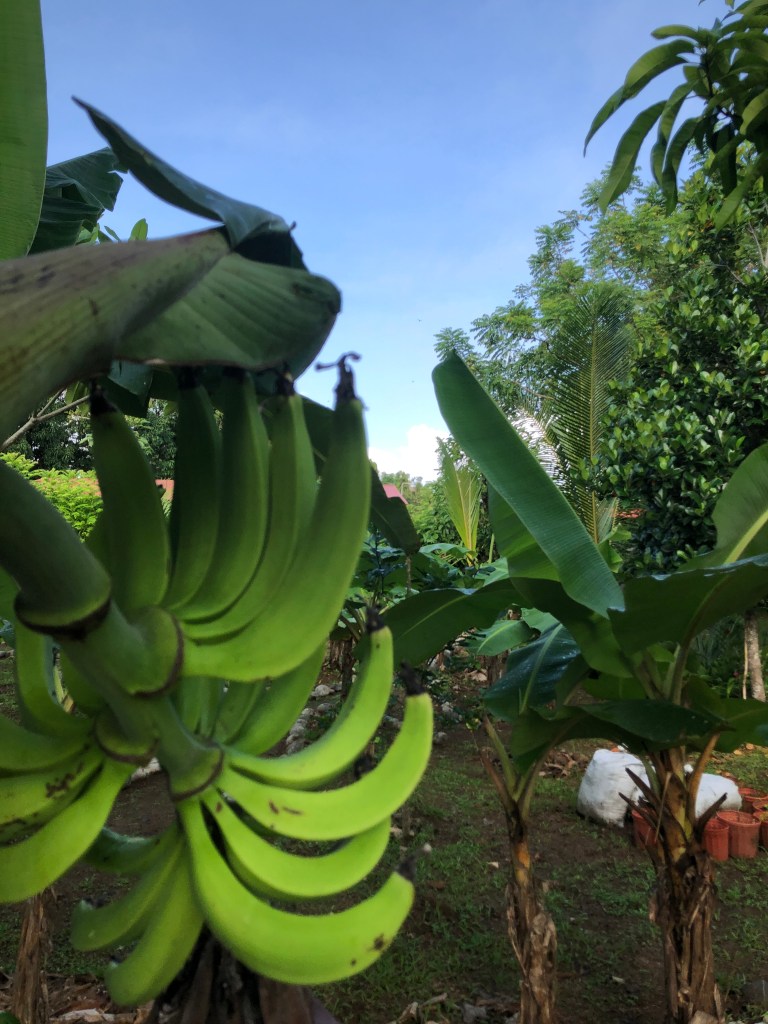
Once the dust cleared westarted to ask the question: What next? A possible grid collapse, food shortages, an economic meltdown, total anarchy, a cashless society, and the digital ID were just some of the headlines making news. And then the war between Russia and the Ukraine broke out. My wife is from a small town in Germany. We started getting the first-hand account from her parents and began to see war fever on the horizon. I quickly typed into my browser to see how badly a world war would affect us here. I have to admit our cage got rattled pretty hard and we even started considering heading back to one our countries. Then it hit me. I heard the voice of The Spirit and understood what I should be doing. Yes, it is important to get an overview of worst case scenarios, but, can we really do anything about them? Perhaps to some degrees we can. I lifted my eyes, said a prayer and put all those fears in mightier hands. At that moment I realized that there are better things to invest your time and energy in, such as improving what you can. Is there enough food growing in the garden? That was the first thing that came to my mind. We need to eat! So, within a few days we were in the garden planting more plantains, yucca, spinach and other heavy bearing plants. Let me tell you, it feels real good to look at your garden and see alot of food out there.
At this point in the article, you might be already wondering what you can do to improve your own position. Some of us are fortunate enough to have identified where our refuge should be. Maybe you are just starting to do your research. How about we start visualizing the process as if in our home countries, working a 9 to 5 and just trying to get by. Where do we start then? Let’s begin with your approach to life and developing the discipline of being sustainable. If you already live in a more rural setting that will be a huge plus because you can start getting into the thick of it. However, even a city slicker can build self-reliance and gain skills that will help with their future move. A good starting point is to look at your spending. Eating in more, buying things you need instead of want, re-using plastics, re-purposing glass jars, getting more exercise and fixing things instead of just throwing them out (took me a while with this one). As you get the hang of it, your mindset will change and it will become second nature. I recommend checking out this site for a good checklist to start with http://ecofriendlyhabits.com
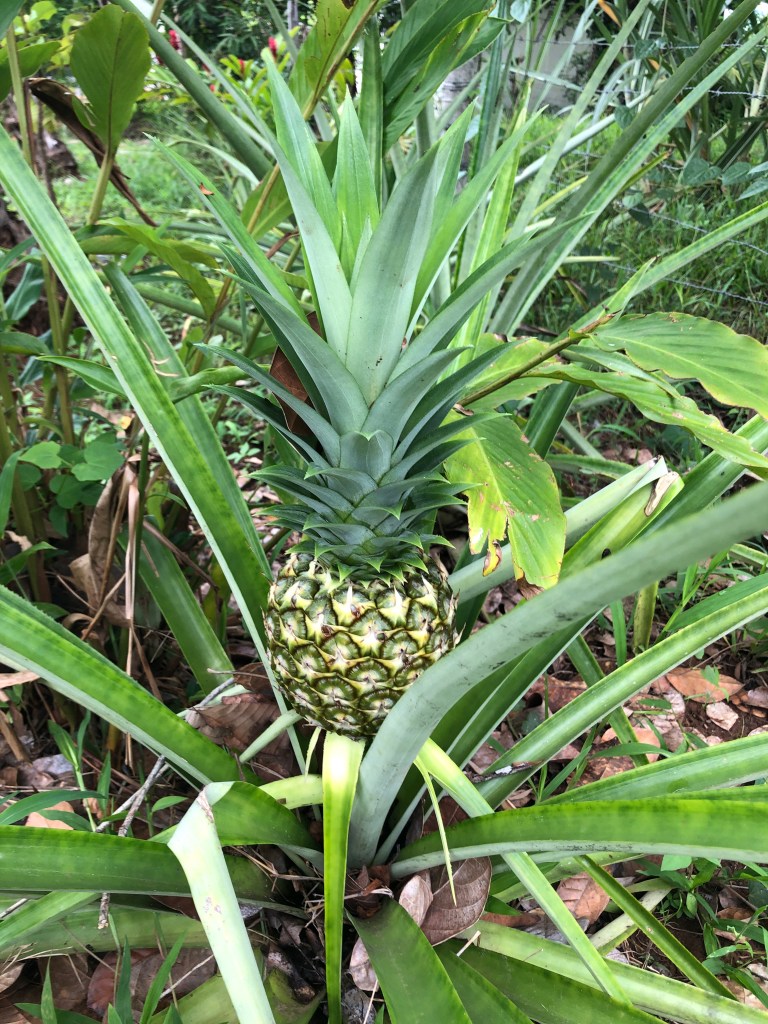
If you do decide to venture out into a similar setting as we have, our number one piece of advice is to take it SLOW. It is not easy to do when coming from developed countries where things are alot more efficient. This is not the case in The Third World! Allow me to give you an example. After we found a small rental house, we started looking for land. We sat down and decided to sell my truck to generate money for the purchase. We approached a neighbor and were welcomed with open arms. It was a hot summer day, and we were parched. The couple offered us freshly made pineapple smoothies. We thought to ourselves “ They seem alright”. After seeing the land and discussing the price we felt it was a good deal. We set up a date to meet with our lawyer and shook hands. We did our due diligence and made sure the titlework was clean. The big day came, we got on a bus and rode two hours to the city of Santiago. Once ready to sign, the couple stalled and said that they had changed their mind on the price. The increase of course was ridiculous. Looking back on it those were some expensive smoothies! We ended up having to pay our lawyer the fees for preparing the contract and her time which ended up being over one thousand US dollars. In hindsight it would have been smarter to have gotten a notarized promissory contract first. Yes, we were bummed, but our faith and resolve proved to reward us with a piece of land that is far better. All things worked out in our favor! (Romans 8:28) By the way, we still love pineapple smoothies especially made with fruit from our garden.
On the next try we were extra careful and instead of using a lawyer I typed up a sales contract on my own. After notarizing documents, we got back to look at our land. “We have land!” I shouted. We never owned real estate before and just the thought of it was unreal. The first thing we wanted to do was landscape our property correctly. So, we began talking about the location of our house, the views, paths, boundaries, trees, a septic tank, water lines and pretty much everything we could think of. Doing this right was crucial to utilize the lay of the land, sunlight and water run-off to create an edible landscape.
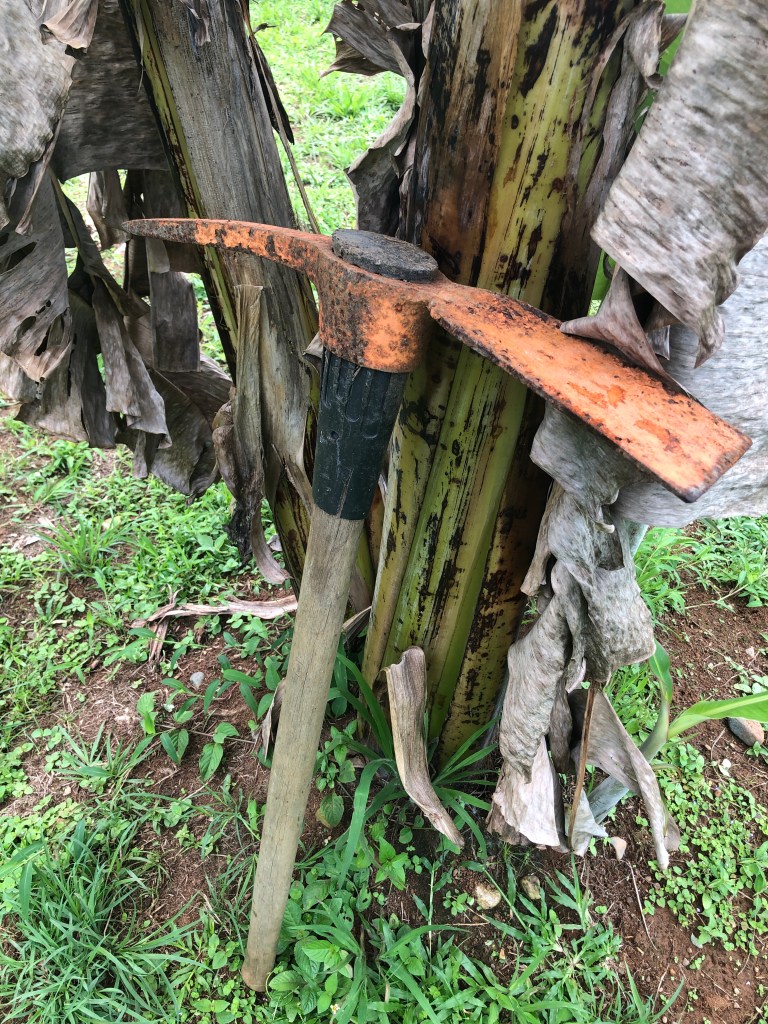
The same pickaxe – seven years since
Getting water on our land would be the first priority. The nearest connection was over 200 yards away from our fence line. That meant I needed to dig a long trench about one foot deep and lay pvc pipe all the way there. Out here there is no water company. Our water comes from the mountains through a long network of pvc pipes that run through a dense tropical jungle. Another thing, the clay soil in Panama becomes rock hard during summer and is very difficult to dig up. Let’s just say I was about to get a good workout. I went to the local hardware shop in Mariato and bought a pickaxe, a shovel, pvc pipes, fittings and a huge can of pvc glue. The bill rang in at just under $200. I got enough materials to bring the water to our property and create a square loop along the perimeter. It took roughly 4 full days to finish the job. Now we had mountain spring fed water in our tap! Some months later the government sent the ministry of health to inspect our water quality at the source and told us it was 99.9 % pure. One official suggested the village could sell the rights to a bottling company and share in the profits. Fortunately, everyone voted a resounding no. *(future link gravity water)
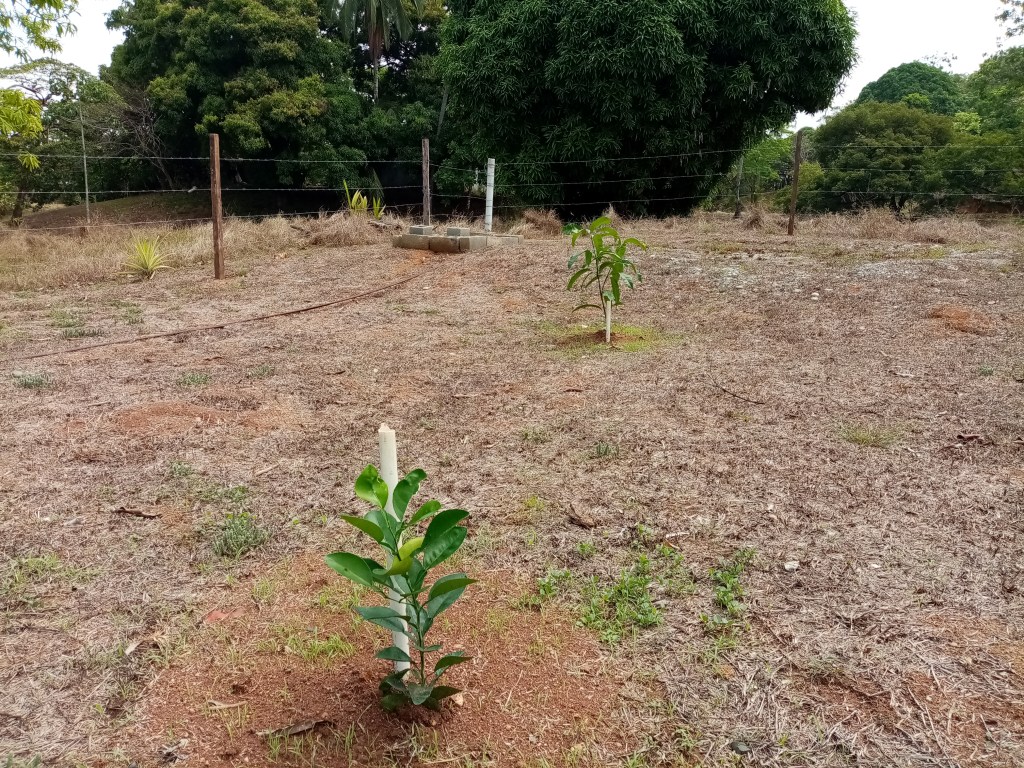
Our first attempts
Once we had water, it was time to begin cultivating our garden areas. The land we bought was bare ground and like I said earlier made up of red clay. Well let’s just say it is one of the most difficult kinds of soils to deal with. Pretty much everything that I planted died within the first couple of weeks except a mango tree, a lime tree and a moringa tree. Everytime I dug down we would find tons of white beetle grubs eating at the roots of the plants. Another challenge was that the Panama sun would scorch the clay soil and dry it out by noon despite watering heavily in the morning. I went back to my laptop and took a look at some permaculture videos dealing with tropical settings. I found a couple ideas that stood out and would cost very little to implement. One was to install drip lines and the other was to plant pioneering plants that the grubs wouldn’t kill. The drip lines were easy to get. I had no clue as to the plants., but God had things lined up as always. That afternoon my wife and I visited a neighbor who was cutting down some sugar cane in her yard. We were offered some to eat and I asked if I could get a few pieces to plant. She gave me some and explained the right way to plant them. We saw some plantains growing there too and I asked her where I could buy seeds. She smiled and offered me some for free. I didn’t know it but the seeds are the baby off-shoots that grow from the base of the mother plant. She took a ‘koa’ (spade) and dug a couple out. Having a good neighbor is a mighty blessing. You know what? Those two types of plants turned out to be excellent pioneering species. Not only do they grow in the toughest conditions here, but their leaves excellent green manure which permaculture calls “chop and drop” material. The older leaves when cut off and placed around the base of other plants release high amounts of nitrogen into the soil. They also keep the ground moist. We now had a winning formula and in time it would create the micro-climate needed to introduce more species. (future link here permaculture)*
Another interesting challenge you will face when starting over in a foreign land is adapting to the local culture. During the first six months we were still looking at things through a tourist lens. When it wore off, I began noticing some things that needed improvement. Although I spoke fluent spanish the locals had a hard time understanding me. I began observing things more and realized that when they talked, they used three-to-four-words in a sentence at most. If they can , they use one to two words – that’s it! No wonder they got cross eyed when having to listen to more than five words of mine. My wife on the other hand had no problem because her Spanish was not fluent. That forced her to speak in very short sentences. We got a good laugh out of that one and still do. The locals also would not accept invitations to have a coffee or sit down for a meal. After several unsuccessful invites, we sat down to talk about it. We thought “Maybe they don’t like us?” But, we figured it out. Again, our observations were that the locals did not visit one another in their homes (and almost everyone here is family!). The only things they ever gather for are to work, hang out on the beach, go to church and attend birthday parties – outdoor stuff. The thing is we are used to a different appraoch in our cultures and though we mean well it is not necessary to try it our way. Trust me, you will have plenty of opportunities to connect and build relations. People need people. Things will come up where you will be in need, or the locals will and that’s when the best opportunities present themselves. (Culture shock management future link)*
Now, just in case you were wondering, our adventure has been carried out on a tight budget from day one. My income when I met my wife was just under a thousand dollars a month and hers was slightly less than mine. With the low cost of living in this region we were able to make ends meet as a couple. Add a newborn, the purchase of land and the construction of a future home to the mix and your income needs go up dramatically. Well, being partially off-grid in a third world jungle doesn’t offer many opportunities for that (at least legitimate ones). But, never being afraid of a little hard work, I approached a local fisherman to sign up as a ‘peon’ (apprentice helper). I knew it wouldn’t pay much in terms of money, but I was told I’d get a decent amount of fresh fish in exchange (or so I hoped). The job entailed going out to sea at night and fishing with nets until the sun came up. While I did this my wife would put our son to sleep and write freelance articles for websites in Germany. As romantic as it sounds it didn’t quite pan out. My skipper ended up trying to stiff me on the right number of fish I was owed every time. And one day he nearly killed us by capsizing the boat in heavy shore break. I quickly hung up my fishing gloves and proceeded to try the ‘ex-pat economy’ instead.
Back in those days the number of foreigners living permanently in the area was minimal. During the summer season, a farmers’ market started taking place in the town of Torio where sellers could set up shop for free. My wife suggested I sell sushi there (during her pregnancy I learned the art of making sushi rolls). I gave it a shot and each time I went we sold out. Once the market season was over, I sat down on my laptop to conduct a break point analysis of my business venture. Despite selling out at a price point that was the maximum people would pay, I was not earning a living wage. We did get a bunch of ‘free’ sushi rolls out of it, but my son’s monthly diaper expense alone was beyond our profit margins. I started looking again at the drawing board and came up with a couple other ideas. In the end though I ended up with the same results. There just wasn’t a real market economy to be a part of yet. ” Well, if I can’t generate more income what can I do to make my exisiting income go farther?” I asked myself. The only logical thing I could do was cut down on our expenses, but how?
 Good Refuge